
🚪 G MA'S BACK ROOM
The deep end of G Ma's kitchen — the rest of Season 1 written out in full, her holiday specials, and the whole-season binder. The Kitchen out front is her gift. Back here is where she keeps the good stuff.
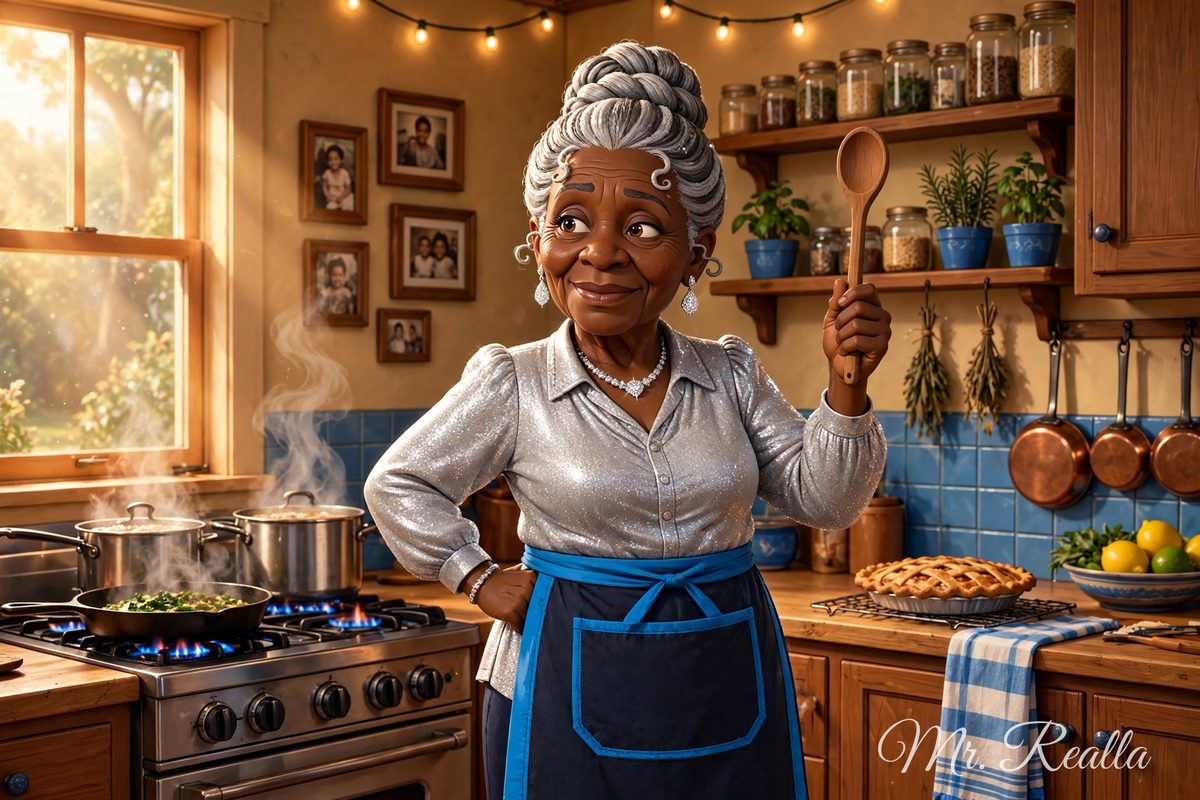
"Well hey, baby. You found the back room."
Every real kitchen has one — the room behind the room, where the cook keeps the recipes she doesn't hand out at the door. Out front I teach the welcome lessons free, because a child should never have to pay to learn how to feed herself. But back here? Back here is fifteen lessons deep, holiday tables, and forty years of knowing how.
Everything on this page is written out the way I teach it — the story first, every real step, my word and my safety word on every lesson. No shortcuts, no hollow pages. If it's got my name on it, it's worth your money. That's the rule.
Now — wash your hands, and let me show you what's back here.
📋 The Menu — What's in the Back Room
The whole package, named piece by piece. One buy, and every bit of this is yours — see "How Buying Works" right under the menu.
🤝 How Buying Works — The Honest Version
Buy it once. It's yours forever. That's the whole deal.
This house runs on Own It Outright — the same spirit as everything Mr. Realla builds. No subscription nibbling at you every month, no renting G Ma's lessons back from us, no "your access expired." You buy the Back Room package one time, and it belongs to you the way a cookbook on your shelf belongs to you.
How you'll get it: when the doors open, your package comes to you by email — the full binder and lessons as yours-to-keep files — and it will live on your own members' shelf here in the house as the accounts open up, so you can come back to it any time. Print the cards, cook from them, hand them down. Yours.
Where it stands today: the package is built — you're looking at it — and the till is being wired up honest and legal, the way this house does everything. The Back Room door opens the moment the house's payment pipe is ready, and not one day before it's ready to treat you right.
🔔 Opening Soon — hear it first.
The door isn't selling yet, and we won't pretend otherwise — no fake buy buttons in G Ma's house. Join the Fan List and you'll be the first to know the day the Back Room opens, straight from the family.
💌 Join the Fan List — Hear It First →📚 The Deep Lessons — Season 1, Lessons 5–15
Written complete, the way she teaches them: the story first, what you need, every real step, her word, and her safety word. Press a lesson open and cook along. (Lesson 8 already lives free out front in the Kitchen — it's waiting for you there.)
"Every cook you ever heard of started with something small and soft. Today your hands learn the first rule of the knife: the blade works for the hand that respects it."
Ages 4–7 · little hands, grown-up right thereThe Story First
Before the stove, before the cast iron, before any of the big cooking — a cook learns her tools. G Ma starts every little chef the same way: a plastic knife, a ripe banana, and total seriousness. The banana is forgiving. The lesson is not a game. Small hands, real respect — that's how knife cooks are made, one careful coin at a time.
What You Need
- 2 ripe bananas (yellow with a few brown freckles — sweet and soft)
- A handful of soft strawberries, washed
- A plastic or butter knife · a cutting board · a small plate
- ½ cup plain yogurt · 1 teaspoon honey · a pinch of cinnamon — for the dipping sauce
- A damp towel, to keep the board from dancing
The Steps
- Hands first. Always. Twenty seconds, soap and water, "Happy Birthday" twice. Then sleeves up and hair back — we dress like cooks before we cook like cooks.
- Set the stage. The damp towel goes under the cutting board so the board sits still and behaves. A board that slides is a board that teaches the wrong lesson.
- Peel the banana. Pinch the stem, pull it down, strip the peel in four ribbons. The peel goes in the compost bowl — clean as you go, even at four years old.
- Learn the hold. Knife in your strong hand, fingers wrapped around the handle like a handshake. The other hand holds the banana with fingers curled back — tucked away from the blade like a little bear claw. We practice the claw now, on soft food, so it's in your hands before the food ever gets hard.
- Cut coins. Press down gentle and steady — plastic knives saw a little, and that's fine. Coins about as thick as your thumb is wide. If one rolls away, it rolls away. Nobody chases a banana.
- Top the strawberries. Grown-up shows first: hold the berry, slice the green top straight off. Little hands do the next one. The tops join the peel in the bowl.
- Stir the dip. Yogurt, honey, cinnamon in a small bowl. Stir till it swirls. Taste it — clean spoon — and say what it needs. That's a cook's first seasoning call, and it counts.
- Plate it pretty. Banana coins in a circle, berries in the middle, dip in a little cup. A cook plates like somebody she loves is about to eat it — because somebody is.
"Slow is not the same as scared, baby. Slow is how careful looks. Fast comes later — careful comes first, and careful stays."
G Ma's safety word: little ones never carry a knife across the kitchen — the board comes to them. Plastic knives only at this age, soft foods only, and a grown-up's eyes stay on the cutting, not the phone. Clean, Separate, Cook, Chill — and at this age, the little ones watch the grown-up do the Separate step.
"An egg will teach you more about heat than any cookbook. Too hot and it toughens up mad. Just right — and it's silk. Listen to the egg, baby."
Ages 8–12 with a grown-upThe Story First
This is the lesson where the stove turns on — the first real heat of the season, earned by five lessons of careful hands. Eggs are the perfect first fire food: cheap, quick, honest. They don't hide a mistake and they reward a gentle hand in about three minutes. Control the heat and you control the egg — that's not just breakfast, baby, that's a cooking philosophy.
What You Need
- 6 eggs · 2 tablespoons milk or water
- 1 tablespoon butter · salt and black pepper
- A mixing bowl · a small cup (for cracking into, one egg at a time)
- A whisk or fork · a rubber spatula · a nonstick or well-seasoned skillet
- Toast, for serving — a cook thinks about the plate, not just the pan
The Steps
- Crack on the flat, not the edge. One firm tap on the flat counter — never the rim of the bowl, which pushes shell INTO the egg. Thumbs in the crack, open it over your small cup.
- One egg at a time, into the cup first. Look at it. No shell? Good egg? THEN it joins the bowl. One bad egg or one shell chip never gets to ruin the whole batch — that's not just eggs, that's kitchen management.
- Fish shells with a shell. If a chip falls in, don't chase it with your fingers — it swims away. The edge of the eggshell cuts through the white and scoops it right out. Cook's trick, passed down.
- Whisk till it's one color. Eggs, milk, a pinch of salt. Whisk till there are no streaks — thirty honest seconds. The salt goes in now so it seasons all the way through.
- Low heat, butter, patience. Skillet on LOW. Butter in, and let it melt till it foams and smells sweet — not brown, not smoking. If the butter is in a hurry, the pan is too hot, and you pull it off the fire and let it calm down. The cook controls the heat; the heat does not control the cook.
- Eggs in — and wait. Pour them in and count to ten before you touch them. Let the edges just begin to set.
- The slow push. Spatula pushes the eggs gently from the edge to the middle, big soft folds, letting the runny part flow into the gaps. Push, pause, push. About 2 to 3 minutes. You're not stirring — you're herding silk.
- Off the heat BEFORE they look done. When the eggs are soft, glossy, and just barely loose, the pan comes off. They finish cooking from their own warmth on the way to the plate — carryover is real, and a great egg cook trusts it. 160°F inside if you're measuring, soft and steaming if you're looking.
- Season and serve right now. Pepper on top, onto warm toast, and to the table without delay. Eggs wait for nobody — and in G Ma's kitchen, everybody's already seated.
"Anybody can make eggs loud and fast. We're making them soft and right. Gentle hands make gentle eggs, baby."
G Ma's safety word: hands get washed after cracking eggs — raw egg is a Separate-step food. Never taste raw batter or raw egg, ever. The skillet handle turns toward the back of the stove so nobody's elbow finds it, and little chefs announce "hot pan" before they move it, every time.
"The claw is not a trick, baby. The claw is a promise your fingers make to you — knuckles forward, fingertips tucked, and the blade can never find what isn't there."
Ages 8–12 with a grown-upThe Story First
Plastic knife days are behind you. This lesson puts a real knife in your hand — a small chef's knife or santoku, sized for the cook, sharp and respected. And the first thing G Ma teaches is not cutting. It's the claw: the curled-finger grip every professional cook on earth uses, the grip that has protected more fingers than any rule ever written. Master the claw and a knife becomes a tool. Skip it, and it stays a worry.
What You Need
- A real knife, right-sized for the cook's hand · a stable cutting board · a damp towel
- 1 cucumber · 2 bell peppers · a handful of green beans — the practice crew
- For the crunchy plate: a splash of vinegar or lemon juice · a pinch of salt · a drizzle of oil
- Patience — this lesson is measured in good cuts, not fast ones
The Steps
- Board first. Damp towel under the board, board flat and still. Then the knife talk: a knife is carried point-down at your side, announced out loud ("knife coming through"), and never — ever — left hiding in a sink of soapy water.
- Make a flat side. Round food rolls, and rolling food is the enemy. The grown-up's first cut — or yours, slow and supervised — slices the cucumber in half the long way. Now each half sits FLAT. Flat side down, always: the food can't run from a knife it can't roll away from.
- Build the claw. Holding hand: fingertips curled under like you're holding a secret, knuckles pointing forward, thumb and pinky anchoring the back. The blade's flat side rests LIGHTLY against your knuckles — the knuckles are the guide rail, and your fingertips live safely behind the wall.
- Cut with the walk. Tip of the blade stays near the board; the knife rocks and walks backward through the cucumber as your claw walks back with it, knuckles leading. Slow, even slices. The claw retreats; the blade never chases it.
- Peppers next. Top and bottom off (flat sides again), walls opened into a sheet, seeds shaken out over the bowl — then strips, claw on guard. Peppers are louder cutting than cucumbers. That crunch means you're doing it right.
- Beans by the bunch. Line the green beans up like soldiers, claw across the whole bunch, and cut the ends off in one honest pass. Grown-up trims taught many a cook that tidy is faster than messy.
- Dress the crunchy plate. Everything into a bowl: vinegar or lemon, salt, a small drizzle of oil. Toss with clean hands. Taste — clean spoon — and adjust. You just seasoned raw vegetables with nothing but acid, salt, and nerve. That's a cook.
- Wash the knife like it matters. By hand, blade facing away, dried right away, put away where it lives. A knife's day ends clean and home — same as a cook's.
"I heard you the first time — I just needed you to hear yourself. Now let me hear those hands: slow, even, knuckles forward. That's the sound of a cook being made."
G Ma's safety word: demonstrate first, always — a grown-up cuts the first of everything. Cut away from the body, never toward a hand, and if a knife falls, you step back and let it fall. A falling knife has no handle. Boards and hands get washed between raw produce and anything else the meal touches.
🌿 Lesson 8 — Greens That Love You — already yours.
The greens lesson sits in the free Kitchen out front, written out in full, where it belongs — some lessons G Ma gives away on purpose, and greens that carried families through lean times is one of them. If you haven't cooked it yet, go get it free, then come back here for the one-pot that follows it.
🌿 Read Lesson 8 Free in the Kitchen →"One pot fed the village, baby. One pot still feeds the family. Learn to layer a pot right and you'll never look at a bag of rice the same way again."
Ages 8–12 with a grown-upThe Story First
We travel now — all the way to West Africa, where this dish's grandmothers live. Jollof rice is celebration food and everyday food at once: rice cooked IN a seasoned tomato-pepper base, so every grain comes up red, smoky, and proud. Nations argue about whose is best, and G Ma stays out of that argument with a smile — what she teaches is the craft under all of it: one pot can feed a family, if you layer it with intention. Heritage first, technique riding on it — that's how we travel in this kitchen, with respect.
What You Need
- 2 cups long-grain rice
- 3 tomatoes · 1 red bell pepper · 1 onion (half for the base, half sliced)
- 2 cloves garlic · a thumb of ginger · 1 hot pepper if your house likes warmth (optional, and your call)
- 2 tablespoons tomato paste · 3 cups stock
- 1 teaspoon thyme · 1 teaspoon curry powder · 2 bay leaves · salt
- ¼ cup oil · a heavy pot with a tight lid, and foil to seal it
The Steps
- Blend the base. Tomatoes, bell pepper, half the onion, garlic, ginger, and the hot pepper if you're using it — blended smooth (grown-up runs the blender). This red gold is the soul of the pot.
- Wash the rice till the water runs clear. Same discipline as the greens: you wash till it's honest. Rinsing off the loose starch is how the grains stay separate and proud instead of clumping.
- Fry the paste. Oil in the heavy pot, the sliced half-onion till soft, then the tomato paste — and you fry it, stirring, a full 2 minutes, till it darkens a shade. Raw paste tastes tinny; fried paste tastes like somebody knows what they're doing.
- The base goes in to reduce. Pour in the blended base with the thyme, curry, and bay. Simmer it down 10 to 12 minutes, till the oil starts to shine at the edges. You're cooking the raw taste out and the deep taste in.
- Rice and stock, measured like it matters. Stock in, salt it so it tastes seasoned all by itself, then the washed rice, stirred ONCE to settle it level. From here on, the spoon mostly rests — this is a layering dish, not a stirring dish.
- Seal it and steam. Foil across the pot, lid on top, the lowest heat you have, 25 to 30 minutes. The rice finishes in the steam — an old, patient trick that works on every continent. No peeking: every peek lets your steam escape and your rice down.
- Rest, then fluff. Off the heat, 10 minutes still sealed. Then open it away from your face — steam is real — pull the bay leaves, and fluff the rice with a fork, folding the bottom grains up through the top.
- The bottom is the prize. If your heat was right, the very bottom has a light, smoky crust where the rice kissed the pot. Cooks fight over that part in three languages. Serve it proud, on top.
"We don't do messy in my kitchen; we do washed, seasoned, and ready — and baby, that goes for the rice most of all."
G Ma's safety word: the foil-and-lid seal holds real steam — grown-up lifts the lid, tilted away, every time. Hot pepper hands never touch eyes; wash after handling. Leftovers chill within 2 hours, and rice reheats steaming hot all the way through.
"Corn fed civilizations, baby — but only because somebody's grandmother figured out the science. Today I teach you the science, and then I teach your hands."
Ages 8–12 with a grown-upThe Story First
Thousands of years ago in Mexico, cooks discovered something that sounds like magic and is actually chemistry: soak corn in water treated with lime or ash, and the corn changes — it softens, it grinds easier, and it gives up nutrition that plain corn keeps locked away, including niacin your body needs. That process is called nixtamalization, and it kept whole peoples healthy on a corn diet. Corn is a science — and the tortilla, pressed by hand and puffed on a hot comal, is the diploma.
What You Need
- 2 cups masa harina (the flour made from nixtamalized corn — the science, ready in a bag)
- 1½ cups warm water, plus a little more by the spoonful · ½ teaspoon salt
- A heavy skillet or comal · a tortilla press, OR a heavy book and two pieces of plastic (a cut-open storage bag works)
- A clean kitchen towel — the tortillas' warm blanket
The Steps
- Mix the masa. Masa harina, salt, and warm water in a bowl. Stir, then get your hands in — clean hands are the best tool ever made — and knead 2 minutes till it feels like soft play dough. Too crumbly? A spoon of water. Too sticky? A dust of masa. Dough talks; cooks listen.
- Rest the dough. Cover it with a damp towel for 20 minutes. The flour drinks the water all the way through. Rested dough presses thin without cracking — patience, again. Patience is in every lesson because it's in every dish.
- The squeeze test. Pinch off a ball about the size of a golf ball, roll it smooth, and press it flat between your palms. If the edges crack like dry earth, the dough wants one more spoon of water. Smooth edges mean you're ready.
- Press. Ball between the plastic sheets, press down firm and even — or roll it gentle with a rolling pin, turning as you go. Peel the plastic off easy. A tortilla is thin, round-ish, and unbothered about being perfect. Rustic is a style, baby.
- The comal, dry and hot. No oil — a tortilla cooks on dry heat. Medium-high till a flick of water dances. Lay the tortilla down and DON'T touch it for 30 seconds.
- Flip twice, watch for the puff. Flip — 30 more seconds, light spots welcome. Flip again — and now press the center gentle with a folded towel or your fingertips' quick tap (grown-ups model this first; the comal is hot). On a good day, the tortilla puffs up like a little pillow, steam doing the work inside. That puff is the whole neighborhood's favorite trick, and now it's yours.
- Into the blanket. Each finished tortilla goes straight into the folded towel to stay warm and soft while its brothers cook. Cold tortillas are stiff; blanketed tortillas stay supple.
- Eat one standing at the stove. House rule, non-negotiable: the cook's first tortilla gets a pinch of salt and gets eaten warm, right there. Then the rest go to the table like they were always the plan.
"That excuse is undercooked — bring me the truth. And the truth is, your hands already know more than you think they do. Trust the dough, baby."
G Ma's safety word: the comal holds heat long after the last tortilla — towel on the handle means "still hot." The quick-press puff move is demonstrated by the grown-up first, and younger cooks use the folded towel from a safe angle, never bare fingers on the tortilla's hot face.
"Italy taught the world a secret, baby: the fanciest sauce you ever tasted probably started with three humble vegetables and twenty quiet minutes."
Ages 8–12 with a grown-upThe Story First
In Italian kitchens, nearly everything good begins with soffritto — onion, carrot, and celery, chopped small and cooked slow in olive oil until they melt sweet. It's not a sauce. It's the floor the sauce stands on. And at the end of the dish comes a second piece of craft with a beautiful name: mantecatura — marrying the pasta to the sauce in the pan with starchy pasta water, so the sauce turns glossy and clings like it was made for the pasta. Because it was. Few ingredients, perfect technique — that's the Italian lesson, and it's a whole cooking life in five words.
What You Need
- 1 onion · 2 carrots · 2 celery stalks — the gentle three, chopped small (claw grip, Lesson 7)
- 3 tablespoons olive oil · 2 cloves garlic · a pinch of red pepper flakes (optional)
- 1 can (28 oz) crushed tomatoes · salt · a pinch of sugar if the tomatoes are sour
- 1 pound pasta (penne or spaghetti) · a mugful of the pasta water, saved before draining
- Grated hard cheese, for the finish · basil or parsley if your house has it
The Steps
- Chop small, chop even. The three vegetables, diced fine — your claw does this work now. Even pieces cook even; that's not a slogan, it's physics.
- Soffritto: the twenty quiet minutes. Olive oil, medium-low heat, the three vegetables in with a pinch of salt. You are NOT browning them. You're coaxing them — stir now and then, let them soften, sweeten, and go translucent and golden at the edges. Twenty minutes of gentle. Rushing soffritto is how sauces get born raw.
- Garlic last, thirty seconds. Garlic and the pepper flakes go in only when the base is sweet — garlic burns fast and bitter is still not invited.
- Tomatoes in, simmer honest. Crushed tomatoes, salt, 20 minutes at a lazy bubble while the pasta water comes to a boil in the other pot. Taste it at the end; a pinch of sugar fixes a sour tomato, never a sweet one.
- Pasta water: a rolling boil, salted like the sea. Pasta in, and cook it ONE minute less than the box says. Before you drain it — and cooks have forgotten this and wept — dip a mug in and SAVE a mugful of that cloudy, starchy water. It's liquid gold. It's the whole marriage.
- The marriage (mantecatura). Drained pasta goes INTO the sauce pan, on medium heat, with a splash of the pasta water. Toss and stir, toss and stir, one to two minutes. Watch it happen: the sauce goes from sitting on the pasta to shining ON it, glossy and clinging, because the starch in the water emulsifies the sauce around every piece. Add water by the splash till it shines.
- Cheese off the heat. Pan off the fire, then the cheese, tossed through. Cheese on high heat goes stringy and sulky; cheese in the warm pan melts into the gloss. Herbs on top if you've got them.
- Serve in warm bowls, right away. A married pasta waits for nobody — it goes to the table shining, or it doesn't go at all.
"Don't confuse loud with right, baby. This sauce never raises its voice — it just takes its time and ends up unforgettable."
G Ma's safety word: draining pasta is a grown-up-supervised pour — heavy pot, steam up, colander steady in the sink, and the cook announces "hot water moving" before a single step. The saved mug of pasta water is hot too; treat it like it matters, because it does.
"The wok waits for nobody, baby. Stir-fry is the fastest lesson in this kitchen — and it starts a full half hour before the fire ever gets lit."
Ages 8–12 with a grown-upThe Story First
Chinese cooks perfected a method built on respect for fuel and food alike: the wok, screaming hot; everything cut small and ready; the food always moving. Great stir-fry cooks chase something called wok hei — the breath of the wok, a whisper of smoke and sear you can only get from real heat and real speed. At home, on a home stove, we chase the honest version: a ripping-hot pan, dry vegetables, and order — because in a two-minute dish, what goes in first is the whole recipe.
What You Need
- 3 cups cooked rice, cold from the fridge (day-old rice fries best — fresh rice goes gummy)
- 2 eggs, beaten · 2 tablespoons high-heat oil
- 1 carrot, cut in matchsticks · a handful of snap peas · 2 green onions, sliced
- 1 cup frozen peas, no need to thaw · 2 cloves garlic, minced · a thumb of ginger, grated
- 2 tablespoons soy sauce · 1 teaspoon sesame oil (the finisher — never the fryer)
- Your biggest, heaviest skillet or a wok
The Steps
- Mise en place — everything ready, everything close. This is the real lesson, so say it with G Ma: in stir-fry, the cooking is the shortest part. Vegetables cut, eggs beaten, sauce measured, rice broken up with your fingers so no clumps survive. Once the fire's lit, there's no time to go find anything.
- Eggs first, out fast. Pan medium-high, a little oil, eggs in — scramble them soft in 30 seconds and slide them OUT onto a plate. They'll finish later. Eggs cooked through the whole stir-fry turn to rubber, and we don't do rubber in this kitchen.
- Heat like you mean it. Pan back on, higher heat, till the oil just starts to shimmer — the grown-up judges this moment. Garlic and ginger in for ten seconds only; aromatics burn in a blink at this heat, and their job is to perfume the oil, not to cook.
- Order by hardness. Carrots first — they're the densest — a minute of constant motion. Snap peas next, a minute more. Everything keeps MOVING: toss, scoop, flip. Food that sits still in a hot wok steams and sulks; food that moves sears and sings.
- Rice in, spread and press. The cold rice goes in and gets pressed flat against the pan for a few seconds at a time, then tossed. Those little crispy edges are the home cook's wok hei — earned, not faked.
- Sauce down the sides. Soy sauce poured around the hot edges of the pan, not dumped in the middle — it sizzles and deepens on the metal before it ever touches the rice. Frozen peas in now; they need two minutes and no more.
- Eggs return; sesame finishes. Eggs folded back in, green onions over the top, heat OFF — then the sesame oil, a teaspoon, tossed through at the very end. Sesame oil is a perfume, not a cooking oil; heat bullies it, so it always arrives last, like a lady making an entrance.
- Taste. Adjust. Serve in the pan's own hurry. Needs salt? A splash more soy. Needs brightness? Another green onion. Then straight to bowls — stir-fry, like eggs, waits for nobody.
"If your hands are free, your mouth can rest — and in a stir-fry, baby, your hands are never free. That's the whole sermon."
G Ma's safety word: this is the hottest lesson so far — grown-up owns the pan handle and judges the heat; younger cooks work the prep line and the tossing only with the pan steadied. Wet vegetables spit in hot oil: pat everything dry. And the rule from Lesson 5 still stands at full strength: nobody carries a hot pan without announcing it.
"Anybody can dump spice in a pot. A cook blooms it in hot fat till the whole house stands up and pays attention. Today your nose learns before your tongue does."
Ages 8–12 with a grown-upThe Story First
India's cooks hold a piece of knowledge the rest of the world borrowed: spices keep their deepest flavor locked up until hot fat unlocks it. The technique is called tadka — whole spices bloomed in hot ghee or oil for less than a minute, then poured, still sizzling, over the finished dish. Under it sits dal — lentils simmered soft and humble — waiting for that pour like a plain dress waiting for jewelry. Spices bloom in fat, and patience builds the base. Two sentences, and you're already a better cook than most restaurants.
What You Need
- 1 cup red lentils (they cook fast and melt — no soaking, no fuss) · 3 cups water
- 1 small onion, diced fine · 2 tomatoes, chopped, or a cup of crushed · 2 cloves garlic
- 1 teaspoon turmeric · 1 teaspoon ground cumin · salt
- For the tadka: 2 tablespoons ghee or oil · 1 teaspoon cumin seeds · 1 teaspoon mustard seeds
- 2 dried red chilies (optional, your house's call) · 2 more cloves garlic, sliced thin
- Rice or flatbread, for serving
The Steps
- Wash the lentils. Rinse in a bowl, swirling, till the water mostly clears. Red lentils are the friendly ones — twenty minutes from dry to done, no soaking, no planning ahead.
- Build the base (bhunao). A little oil, the onion — and now patience: cook it slow, stirring, till it goes deep golden and sweet, 10 to 12 minutes. This slow base-building is called bhunao, and skipping it is how dal ends up tasting like a rumor. Garlic and tomatoes in; cook till the tomatoes melt into the onions.
- Lentils in. Lentils, water, turmeric, ground cumin, salt. Simmer 18 to 20 minutes, stirring now and then, till the lentils fall apart into a thick, golden soup. Too thick? A splash of water. Dal should pour like heavy cream, not stand like cake.
- Taste the base honest. Salt it right BEFORE the tadka — the pour adds perfume, not seasoning. A base that's underseasoned can't be rescued by jewelry.
- Stage the tadka like a ceremony. Everything measured and within reach BEFORE the fat gets hot — seeds in one little dish, garlic sliced, chilies ready. Tadka waits for nobody: from hot fat to finished pour is under a minute, and there is no pause button. Grown-up runs this step the first time; the cook-in-training watches with her whole face.
- Bloom. Ghee in a small pan, medium-high. Test with ONE mustard seed — if it sizzles and dances, the fat's ready. Seeds in: they pop and crackle within seconds. Chilies in. Garlic slices in — and the second they turn golden at the edges (30 seconds, no more), the pan comes OFF. A tadka goes from bloomed to burned in the time it takes to say so. Color is the clock.
- The pour. Straight over the dal, still sizzling, and put the lid on for one full minute. That trapped minute lets the perfume move INTO the dish instead of just announcing itself to the kitchen. Then stir once, and serve over rice.
- Smell first. House rule for this lesson: before anybody tastes, everybody leans in and smells. Bloomed spice is a lesson your nose keeps for life.
"You can argue with each other; you cannot argue with the spoon — and you surely cannot argue with a tadka. It says what it says, and it's right."
G Ma's safety word: mustard seeds pop like tiny fireworks and hot ghee is hot ghee — the tadka pan is a grown-up-handled step, full stop, with young cooks at elbow-watching distance. Long spoon, dry pan (water in hot fat spits), and the pour goes away from the body, always.
"Some food whispers and some food sings loud, baby. This one sings — smoke from the fire, lemon like sunshine, herbs by the handful. Bring your bold heart."
Ages 13+ with a grown-upThe Story First
Across the Middle East, the meal often begins as mezze — a table of small plates meant for sharing, grazing, talking over. And at the heart of the cooking sits an old marriage: fire and brightness. Vegetables charred over open flame till their skins blacken and their flesh goes smoky-sweet, then lifted with lemon, olive oil, tahini, and herbs by the handful. Bright herbs, bold spice, slow fire. This is teen-level cooking — the broiler, the char, the knife work all grown — and it earns its place near the end of the season.
What You Need
- 2 eggplants · 2 red bell peppers — the charring crew
- For the bean dip: 1 can white beans, drained · 2 tablespoons tahini · juice of 1 lemon · 1 clove garlic · salt · olive oil
- For the tahini drizzle: 3 tablespoons tahini · lemon juice · ice water · salt
- A big handful each of parsley and mint · cherry tomatoes · cucumber
- Za'atar if your house has it (or a pinch of thyme + sesame seeds) · warm flatbreads
The Steps
- Char the peppers. Grown-up runs the flame work: peppers under a hot broiler (or over a flame), turned with tongs, till the skins are blackened all over — truly black, don't be shy; the skin is coming off anyway, and the char is the flavor. 10 to 15 minutes.
- Steam them in a bowl. Peppers into a bowl, covered tight, 10 minutes. The trapped steam loosens the skins till they slip off in sheets. Peel, seed, tear into ribbons. Never rinse them — you'd wash the smoke down the drain, and the smoke is the point.
- Char the eggplant whole. Same fire, longer patience — 20 to 25 minutes, turning, till it collapses like a tired balloon. That collapse is the sign: the flesh inside has gone to smoked silk. Cool it, split it, scoop the flesh away from the blackened skin.
- Build the dip. White beans, tahini, lemon, garlic, salt — mashed with a fork for texture or blended smooth, your house's call. Stir the charred eggplant through it. Taste and chase the balance: it should be smoky first, lemony second, salty to finish. A thread of olive oil over the top.
- The tahini drizzle — the ice-water trick. Tahini and lemon in a bowl will seize up thick and stubborn. Don't panic; that's the science. Whisk in ice water a spoon at a time and watch it transform — pale, pourable, creamy as anything dairy ever dreamed. Salt it. This sauce goes on everything on the table.
- The bright salad. Tomatoes and cucumber chopped, the herbs torn in by the handful — not sprinkled, HANDFULS — lemon, oil, salt. Mezze herbs are an ingredient, not a garnish.
- Set the mezze. Small plates, all of it at once: the dip with its oil shining, pepper ribbons, the salad, flatbreads warmed and torn. Drizzle tahini over what wants it, za'atar over what doesn't. The table should look like nobody's in charge and everybody's fed.
- Eat the mezze way. No courses, no waiting — bread in hand, plates passing, everybody building their own perfect bite. This lesson ends in conversation, on purpose.
"Go 'head and sit with that thought till it learns some manners — that's what a mezze table is for, baby. Good food gives people time to get right with each other."
G Ma's safety word: the broiler is adult-only in this house — teens assist at the counter, grown-ups own the flame, the same line as the frying rule. Charred vegetables come off the heat with tongs onto a stable plate, and a blackened skin is HOT all the way through. Announce hot trays; make a lane.
"Fifteen lessons, baby. You washed, you measured, you clawed, you bloomed, you charred. Now put it ALL on one table — and then we bake the cake."
Ages 8–12+ · the whole family crewThe Story First
Every season ends the same way in G Ma's kitchen: the student cooks a whole dinner. Not one dish — a MEAL, planned, timed, and served to people she loves, with every skill from the season somewhere on the table. The menu is built from your own greatest hits: One-Pot Wonders rice (Lesson 9), Greens That Love You (free, out front, and by now yours by heart), Cornbread Rules (Lesson 3, out front), and the graduation crown — a birthday-style layer cake, baked and frosted by the cook of the day. A celebration meal is not a test. It's a victory lap with gravy.
What You Need
- The one-pot rice, the greens, and the cornbread — ingredients per their lessons, all gathered the day before
- For the cake: 2¼ cups flour · 1½ cups sugar · 1 tablespoon baking powder · 1 teaspoon salt
- ½ cup soft butter · 1 cup milk · 3 eggs · 2 teaspoons vanilla
- For the frosting: ½ cup soft butter · 3 cups powdered sugar · 3 tablespoons milk · 1 teaspoon vanilla · a pinch of salt
- Two round cake pans · candles · a written plan — yes, written. Cooks write it down.
The Steps — A Run of the Whole Show
- Plan backwards from the plate. Pick the serving time — say 5 o'clock — and walk the clock backwards: cake frosted by 4:30, greens holding warm from 4, rice steaming at 4:15, cornbread in at 4:35. Write the timeline on paper and tape it to the cabinet. Professional kitchens run on exactly this. So does G Ma's.
- Assign the crew. Every hand gets a job by its lesson: little ones wash and tear (Lessons 1–2), measurers measure (Lesson 3), claw hands chop (Lesson 7), the graduate runs the stove. A celebration meal is a crew meal. Nobody's a guest in the kitchen today; everybody's a cook.
- Cake first. Oven 350°F, pans greased and floured. Dry things whisked; butter and sugar beaten till pale and fluffy — that's air you're beating in, and air is what makes a cake a cake. Eggs one at a time, vanilla, then flour and milk in turns, gentle at the end. Divide, bake 25 to 30 minutes, till the tops spring back. Cool 10 in the pans, then out onto racks, ALL the way cool before frosting — warm cake melts frosting into a slide, and we've all seen that movie.
- Greens on low. The greens go on early and hold happy at the gentlest simmer — they're the forgiving dish, built for exactly this. Pot liquor rich, turkey back in. They'll wait for the table like family.
- Rice, sealed and steaming. The one-pot runs on Lesson 9's clock: base reduced, rice in, foil and lid, no peeking. When it's resting, DO NOT open it to check. Trust is an ingredient too.
- Cornbread last, timed to land hot. The batter is ten minutes of work; the bake is 25. Time it so the skillet comes out as the family sits down. Hot cornbread at a celebration is not a detail. It's an announcement.
- Frost the cake like you mean it. Butter beaten soft, powdered sugar in by the cup, milk by the spoon, vanilla and salt — beat it till it stands in soft peaks. A crumb coat first (a thin layer that traps the crumbs), ten minutes in the fridge, then the real coat, swooped with the back of a spoon. Perfection is not the goal. Pride is.
- Set the table and call them in. The graduate plates nothing alone: every dish carried by the hands that made it, announced as it lands. Then the cook sits down FIRST — that's new, and it's earned — and the table does what tables in this house do.
- Candles, and the close of the season. The cake comes last, candles lit, and the youngest cook gets to say the words over it. Season 1 ends the way every G Ma lesson ends: everybody eats, and nobody — nobody — leaves the table hungry, or uncelebrated.
"I'm not mad — I'm just the period at the end of that sentence. And this meal, baby? This meal is the sentence. You cooked it. Sit down somewhere — at the head of your own table."
G Ma's safety word: a full dinner means a full kitchen — the four steps run the whole show (Clean, Separate, Cook, Chill), the 2-hour rule watches every holding dish, and hot-pot lanes get announced every single trip. Many cooks, one safety captain: the grown-up's word on heat and knives is final, even — especially — on graduation day.
🎄 The Specials Shelf — Her Crown Pieces
Two special-occasion lessons, the biggest teaching G Ma does. A holiday table and a Sunday table, each one complete: the game plan, every dish, every step. These are the lessons families hand down.
"Thanksgiving is not a dinner, baby. Thanksgiving is a season finale with an audience. We plan it like one — two days, one turkey, and a table that tells the family what they mean to us."
A family production — grown-ups own the bird, everybody owns a jobThe Story First
Every family has a table that proves who they are. In this house, it's Thanksgiving — the day the kitchen runs from sunup, the day the good dishes come down, the day G Ma ran the whole production like a general with a spoon. Her law of the holiday: the turkey is the easiest part. The TIMING is the cooking. A bird, a dressing, a gravy, and her Sweet Potato "Bigger Than Me" Pie — each one simple. All four landing hot at the same moment? That's the craft, and today it's yours.
The Two-Day Game Plan
- The day before: bake the pie (it slices better tomorrow — some desserts improve with a night to think). Make the cornbread for the dressing. Chop the onion and celery; keep them bagged and cold. Set the table. Yes, today. Tomorrow-you is busy.
- Morning of: turkey out of the fridge one hour before the oven. Dressing built and waiting. Stock warming. The written timeline on the cabinet: a 12–14 pound bird roasts about 3 to 3½ hours at 325°F — work backwards from the table and write every landing time down.
- The last hour: bird rests (30 minutes, non-negotiable), dressing bakes, gravy gets born from the drippings, and the cook sits down for five full minutes before anybody is called. A rested cook is part of the menu.
What You Need
- 1 turkey, 12–14 lbs, fully thawed (a frozen bird needs 3–4 days in the fridge — plan like a cook) · salt & pepper · soft butter · a halved onion, an apple, a handful of herbs for inside
- For the dressing: a full skillet of cornbread (Lesson 3), day-old and crumbled · 1 onion · 3 celery stalks · ½ cup butter · 2–3 cups stock · 1 teaspoon sage · salt & pepper · 1 egg
- For the gravy: the pan drippings · ¼ cup flour · stock, as much as it takes
- For the pie: 2 cups mashed sweet potato · ½ cup melted butter · ¾ cup sugar · ½ cup milk · 2 eggs · 1 teaspoon vanilla · 1 teaspoon cinnamon · ½ teaspoon nutmeg · a pinch of salt · 1 unbaked pie crust
The Steps
- The pie (day before). Oven 350°F. Sweet potato, butter, sugar, milk, eggs, vanilla, spices, salt — beaten smooth, poured into the crust, baked 55 to 60 minutes till the center barely trembles. Cool it all the way; chill it overnight. Slice it cold and proud tomorrow. The name is the family joke: it's "Bigger Than Me" pie, and it has never once been wrong.
- Bird prep. Oven 325°F. Turkey patted dry — dry skin is crisp skin. Salt and pepper inside and out, like you mean it. Butter rubbed over the whole bird. Onion, apple, and herbs tucked inside — aromatics, not stuffing; the dressing bakes in its own dish where it can crisp, and where it cooks SAFELY all the way through.
- Truss it simple. Legs tied together with kitchen string, wings tucked under. Into a roasting pan, breast up. A loose tent of foil over the breast for the first two hours, so the top doesn't outrun the rest.
- Roast and don't fidget. About 3 to 3½ hours for this size. After the foil comes off, baste twice with the pan juices — twice, not ten times; every oven opening costs you heat and time. The bird is done at 165°F in the thickest part of the thigh, juices running clear, the leg moving easy in its joint.
- THE REST — thirty minutes. Bird out, tented, left alone. A turkey carved hot spills its juice all over the board and eats dry; a rested turkey keeps it. While it rests, the oven is free and the dressing goes in. This is the timing the whole day was built around.
- The dressing. Butter in a big skillet; onion and celery softened sweet. Crumbled cornbread in, sage, salt, pepper. Stock by the ladle till it's moist like good cake batter — wet but not soup. Egg beaten in last (it binds). Into a buttered dish, 375°F, 30 to 35 minutes, till the top is golden and crisp at the edges.
- Gravy from the drippings — the Sunday Pot way, holiday size. Pour the roasting pan's juices into a cup; the fat rises; spoon off all but about ¼ cup of fat and keep every brown drop of the rest. Pan on the stove, fat back in, flour whisked in, cooked 2 full minutes. Then the juices and stock in a slow stream, whisking like you mean business, simmered till it coats the spoon. Taste it honest. Gravy is the dish the whole table will judge you by, and now you know why: it's just drippings, flour, and nerve.
- Carve at the counter, serve at the table. Legs off first, then the breast in clean slices against the grain, arranged on the warm platter. Carving is counter work; the table only sees the glory.
- The call. Somebody with a voice that carries calls the family in. The cook gets thanked before the first bite — House Rule: say thank you, to the cook and for the food. Then pie, cold and perfect, whenever the table is ready for it. It waited all night. It can wait till you're ready.
"Tell the truth before the gravy cools — and on Thanksgiving, baby, the truth is this family. Everything else is just how we say it."
G Ma's safety word: the bird's temperature gets MEASURED, not guessed — 165°F in the thigh, and dressing baked separately to a full 165°F in its center too, which is exactly why it never cooks inside the bird in this house. Hands and boards wash after the raw turkey, every time. Leftovers: carved, covered, and in the fridge within 2 hours of the meal — the cook's last job of the day, and the first gift to tomorrow's sandwiches.
"Sunday dinner has a deadline, baby: church lets out at noon and the family is HUNGRY by one. G Ma's answer was never to rush — it was to be READY."
Grown-ups fry — the family's most-requested tableThe Story First
There's a special kind of cooking that happens in houses where Sunday has a schedule: the dinner that must be triumphant AND on time, for a family arriving in their good clothes with revival appetites. G Ma's system was simple — do the patient work before church, let the oven hold the glory, and fry the fish when the family walks in, because catfish waits for nobody. Sit-Down Mac & Cheese — named for what happens after the first bite — Come-Eat Catfish with hush puppies riding along, and a Kitchen-Sink Peach Cobbler to close, because nothing in this kitchen gets wasted and nobody leaves unsweetened.
The Morning Game Plan (Before Church)
- Mac, assembled and waiting: pasta boiled, cheese sauce made, everything layered in the dish, covered, and in the fridge. It bakes when you get home and needs nothing but heat and time.
- Catfish, seasoned and cold: fillets seasoned, resting in the fridge. The cornmeal dredge gets mixed and bagged. Fish gets dredged at fry time — never before, or the crust goes soft while it waits.
- Cobbler, built in its skillet: fruit sugared, batter ready to pour. It bakes alongside the mac while the fish fries.
What You Need
- For the mac: 1 lb elbow macaroni · ¼ cup butter · ¼ cup flour · 3 cups milk · 3 cups grated sharp cheddar (grate it yourself — pre-shredded wears a coat that melts reluctantly) · 1 cup grated mild cheese for the top · 1 teaspoon mustard powder · salt, pepper, a pinch of paprika
- For the catfish: 4 catfish fillets · 1 cup fine cornmeal · ¼ cup flour · 1 tablespoon seasoned salt · 1 teaspoon paprika · ½ teaspoon cayenne · buttermilk for the dip · oil for frying
- For the hush puppies: 1 cup cornmeal · ½ cup flour · 1 tablespoon sugar · 1 teaspoon baking powder · 1 egg · ½ cup buttermilk · ½ small onion, grated
- For the cobbler: 4 cups sliced peaches (fresh, frozen, or the jar from the pantry — kitchen-sink rules) · ¾ cup sugar · 1 cup flour · 1 cup milk · ½ cup melted butter · 2 teaspoons baking powder · a pinch of salt · cinnamon
The Steps — Mac & Cheese
- Pasta, one minute shy. Boil the macaroni in salted water one minute LESS than the box says — it finishes in the oven, and mushy mac is a sadness we do not serve on Sunday.
- The sauce is a roux, and you know this one. Butter melted, flour whisked in, cooked 2 minutes — same as the gravy, same nerve. Milk in a slow stream, whisking, simmered till it coats the spoon.
- Cheese off the boil. Pan off the heat, THEN the sharp cheddar by the handful, melting between adds. Mustard powder, salt, pepper — taste it honest. A cheese sauce should taste like more than you need, because the pasta is about to calm it down.
- Layer it like you love somebody. Half the pasta, half the sauce, a scatter of cheese; then the rest, sauce over all, the mild cheese crowning the top, paprika for color. This is where it waits, covered and cold, till church lets out.
- Bake at homecoming: 350°F, 30 to 35 minutes, till the edges bubble and the top goes golden in spots. Rest 10 minutes — a rested mac slices in clean, proud squares.
The Steps — Catfish & Hush Puppies
- Dredge at the last minute. Fillets out of their seasoning, dipped in buttermilk, pressed into the cornmeal mix — press it on, like the chicken lesson taught you. Rest them 10 minutes on a rack. Even on Sunday, the crust gets its rest.
- Oil at 350°F, cast iron, batches. About a half-inch of oil. Fillets in away from you, never crowded, 3 to 4 minutes a side till deep golden and flaking at the touch of a fork. Drain on the rack. Salt while hot. You know this dance — the chicken taught your hands.
- Hush puppies in the same oil. Batter stirred just till together — lumps forgiven — and dropped by the spoonful into the hot oil after the fish. Two minutes, turning once, till they're golden all over. They ride along in the fish's oil and pick up its blessing. Drain, salt, keep warm.
The Steps — Kitchen-Sink Cobbler
- Fruit first. Peaches tossed with half the sugar and a pinch of cinnamon; let them sit and make their own syrup while the oven heats to 350°F. Kitchen-sink means the fruit is what you HAVE — peaches today, berries or apples when the season says so.
- Batter over butter. Melted butter in the skillet or baking dish. Batter — flour, the rest of the sugar, baking powder, salt, milk — whisked smooth and poured over the butter WITHOUT stirring. Fruit and its syrup spooned over the top, also without stirring. It looks wrong. It's right. The oven does the mixing: batter rises up through the fruit like it was always the plan.
- Bake 40 to 45 minutes till the top is golden and the edges bubble thick. It shares the oven's second act with the resting mac's warmth and comes out as the family sits. Serve it warm, straight from the skillet, no ceremony but a spoon.
"Come eat. That's the whole sermon after the sermon, baby — church fed your spirit, and now this table does the rest. Sit down somewhere and be loved on."
G Ma's safety word: frying is grown-up work on Sundays too — good clothes or not, the cook at the oil wears the apron and the little ones hold the counter jobs. The morning's assembled dishes stay COLD till they bake (fridge, not counter — the 2-hour rule doesn't take Sundays off), and everything hot lands on the table announced and on a trivet.
🗂️ The Full-Season Binder — Every Card
The whole season on cards: all fifteen lessons, her three signature dishes from the free Kitchen, and both specials. Press print on any card for one clean page — print them all and you've got G Ma's binder, ready for your own kitchen shelf.
The Card
- Wash hands 20 seconds — "Happy Birthday" twice.
- Hair back · sleeves up · closed-toe shoes · apron on.
- The kitchen tour: where the boards, towels, first-aid kit, and fire extinguisher live. Everybody knows. Everybody.
- Board on a damp towel so it sits still.
- Ingredients out and named BEFORE anything cooks — mise en place, G Ma style: "everything in its place, baby."
- Say the four steps out loud: Clean, Separate, Cook, Chill.
"A cook who knows where things live is already halfway fed."
You Need
- A rainbow of washed produce: strawberries, carrot sticks, cucumber rounds, bell pepper strips, blueberries, cheese cubes
- Yogurt or hummus for dipping · a big plate
You Do
- Wash everything; little hands tear the lettuce, snap the beans.
- Sort the colors into piles — count them out loud.
- Arrange the rainbow in arcs; dip in the middle.
- Taste one of every color. Trying is the job; liking is optional.
"Eat the rainbow, baby — your body reads color like a menu."
The Numbers That Never Change
- 3 teaspoons = 1 tablespoon
- 4 tablespoons = ¼ cup · 16 tablespoons = 1 cup
- 2 cups = 1 pint · 2 pints = 1 quart · 4 quarts = 1 gallon
- 1 stick of butter = ½ cup = 8 tablespoons
The Rules
- Dry measures: fill it, level it with the back of a knife. No heaping unless G Ma says heaping.
- Liquids: cup on the counter, eyes at the line, bend down to read it.
- Spoons get dipped and leveled too — measuring is a skill, not a guess.
"Level it off, baby. Cooking forgives a lot, but it counts everything."
You Need
- 2 cups flour · 1 Tbsp baking powder · 1 tsp salt · 1 tsp sugar
- ¼ cup cold butter · ¾ cup milk
You Do
- Whisk the dry four. Rub the butter in with fingertips till it looks like crumbs.
- Milk in; stir till it just holds. Hands in for 5 gentle folds — no more. Dough forgives; don't test it.
- Pat out thick, cut with a cutter or cup, straight down — no twisting.
- 425°F, 12–14 min, till risen and golden. Butter on the table.
"Soft hands, soft dough, soft biscuits. Force is for jars, baby."
You Need
- 2 ripe bananas · soft strawberries · plastic knife
- Dip: ½ cup yogurt + 1 tsp honey + pinch of cinnamon
You Do
- Board on a damp towel. Peel the banana in ribbons.
- Claw grip, fingers tucked: cut coins as thick as your thumb.
- Top the strawberries (grown-up shows the first).
- Stir the dip; plate the fruit in a circle, dip in the middle.
"Slow is how careful looks."
You Need
- 6 eggs · 2 Tbsp milk · 1 Tbsp butter · salt & pepper
You Do
- Crack on the FLAT counter, one egg at a time into a cup first.
- Whisk eggs + milk + salt till one color, no streaks.
- Skillet LOW; butter melted to foam, never brown.
- Eggs in; count to ten; then slow, gentle pushes into soft folds.
- OFF the heat while still glossy-loose. They finish on the plate. 160°F.
"Gentle hands make gentle eggs."
The Grip
- Fingertips curled under · knuckles forward · thumb & pinky anchor.
- Blade's flat rests light on the knuckles — knuckles are the guide rail.
The Rules
- Flat side first on anything round. Board on a damp towel.
- Knife walks back; the claw retreats; the blade never chases.
- Carry point-down, announced: "knife coming through."
- A falling knife has no handle — step back.
- Wash by hand, dry, put away where it lives.
"Knuckles forward, fingertips tucked — the blade can't find what isn't there."
You Need
- 2 bunches collards · 1 smoked turkey wing · 1 onion · 3 cloves garlic
- 4 cups stock · 1 spoon drippings · 1 Tbsp vinegar · 1 tsp sugar · pepper flakes
You Do
- Wash greens in 3 waters. Strip stems, roll, slice ribbons.
- Onion soft in drippings; garlic 30 seconds.
- Stock + turkey simmer 20 min — that's your pot liquor.
- Greens in by handfuls; lid cracked, gentlest simmer 45–60 min.
- Meat off the bone, back in. Vinegar, sugar, flakes, salt.
"Low and slow — good food don't rush, and neither do I."
You Need
- 2 cups long-grain rice · 3 tomatoes · 1 red pepper · 1 onion
- Garlic + ginger · 2 Tbsp tomato paste · 3 cups stock · thyme, curry, bay
You Do
- Blend the base smooth. Wash rice till the water runs clear.
- Fry the paste 2 min till it darkens. Base in; reduce 10–12 min.
- Stock in, salt it honest, rice in — stir ONCE.
- Foil + lid, lowest heat, 25–30 min. No peeking.
- Rest 10 sealed. Fluff with a fork. The bottom crust is the prize.
"One pot can feed a family — if you layer it with intention."
You Need
- 2 cups masa harina · 1½ cups warm water · ½ tsp salt
- A press or heavy book + plastic · a dry, hot comal · a towel
You Do
- Knead to soft play-dough. Rest 20 min under a damp towel.
- Golf-ball pieces; smooth edges = dough is ready.
- Press thin between plastic. Onto the dry comal, 30 seconds.
- Flip, 30 seconds. Flip again — press the center; watch it puff.
- Into the towel blanket. First one gets salt, eaten at the stove.
"Corn is a science — and the tortilla is the diploma."
You Need
- 1 onion · 2 carrots · 2 celery · 3 Tbsp olive oil · garlic
- 28 oz crushed tomatoes · 1 lb pasta · grated hard cheese
You Do
- Soffritto: the three vegetables, small dice, LOW heat, 20 quiet minutes. No browning.
- Garlic 30 seconds. Tomatoes in; simmer 20.
- Pasta 1 minute shy of the box. SAVE a mug of pasta water.
- Pasta INTO the sauce + splashes of its water; toss till glossy.
- Cheese OFF the heat. Serve shining, right away.
"Few ingredients, perfect technique."
You Need
- 3 cups COLD cooked rice · 2 eggs · carrot, snap peas, frozen peas
- Garlic + ginger · 2 Tbsp soy sauce · 1 tsp sesame oil · green onions
You Do
- Everything cut, measured, close BEFORE the fire. Mise en place.
- Eggs scrambled soft, OUT of the pan.
- Hot pan: garlic + ginger 10 seconds. Carrots, then peas — keep it moving.
- Rice in, pressed flat for crispy edges. Soy down the hot sides.
- Eggs back, green onions on, heat OFF — sesame oil last, always.
"In a two-minute dish, what goes in first is the whole recipe."
You Need
- 1 cup red lentils · 3 cups water · onion · tomato · garlic
- Turmeric + ground cumin · tadka: 2 Tbsp ghee, cumin + mustard seeds, garlic slices, dried chilies
You Do
- Base: onion slow to deep gold (bhunao), garlic + tomato melted in.
- Lentils + water + spices; simmer 18–20 min till they fall apart.
- Salt the base right BEFORE the tadka.
- Tadka (grown-up): seeds pop, garlic golden at the edges — under a minute.
- Pour it sizzling over the dal. Lid on, one full minute. Serve on rice.
"Spices bloom in fat — and your nose learns before your tongue does."
You Need
- 2 eggplants · 2 red peppers · white beans · tahini · 2 lemons
- Parsley + mint by the handful · tomato · cucumber · flatbreads
You Do
- Char peppers black all over (grown-up + broiler). Steam covered 10 min; peel, tear.
- Char eggplant whole till collapsed; scoop the smoked flesh.
- Dip: beans + tahini + lemon + garlic, eggplant folded through.
- Tahini drizzle: whisk in ICE water a spoon at a time till it pours pale.
- Herb salad, warm bread, everything on the table at once.
"Bright herbs, bold spice, slow fire."
The Plan (for a 5 o'clock table)
- Day before: shop, gather, write the timeline. Tape it to the cabinet.
- 2:00 — cake batter in (350°F, 25–30 min); cools while you work.
- 3:15 — greens on low to hold warm. Crew jobs assigned by lesson.
- 4:15 — rice sealed and steaming. 4:30 — cake frosted.
- 4:35 — cornbread in. 5:00 — skillet lands as the family sits.
- Candles last. The cook sits down FIRST — earned.
"A celebration meal is a victory lap with gravy."
You Need
- 1 cut-up chicken · 2 cups buttermilk · 1 Tbsp hot sauce
- 2 cups flour · seasoned salt · paprika · garlic powder · cayenne
You Do
- Brine 8–24 hrs cold. Season the flour; dredge hard.
- REST on a rack 20–30 min. The whole secret.
- Oil ½-inch, cast iron, 350°F. Batches — never crowd.
- 7–8 min a side, deep golden, 165°F. Drain on a rack, salt hot.
"The crust remembers everything you did."
You Need
- 1½ cups cornmeal · ½ cup flour · 1 Tbsp sugar (a little, settled)
- 1 Tbsp baking powder · 1 tsp salt · 2 eggs · 1¼ cups buttermilk · ¼ cup butter
You Do
- Skillet IN the oven; oven to 425°F.
- Dry in one bowl, wet in another; wet into dry, stir GENTLE. Lumps fine.
- Hot skillet out (mitt!), drippings swirled, batter in — hear the sizzle.
- 20–25 min, deep golden. Rest 10. Butter where everybody can reach it.
"Hot skillet, light hand — cast iron or nothing."
You Need
- 3–4 lb chuck roast · onions · carrots · potatoes · 3 cups stock
- Gravy: 3 Tbsp drippings + 3 Tbsp flour + stock
You Do
- Season, flour-dust, sear 4–5 min a side.
- Onions in the drippings — scrape up every brown bit.
- Stock in, roast back, lid on: gentlest simmer 3–3½ hrs.
- Carrots at 2 hrs, potatoes at 2½. Rest the meat.
- Gravy: drippings + flour 2 min, stock in slow, whisking.
- Save the bones + ends. Next week's stock is already started.
"Nothing wasted, everybody fed."
The Day in One Card
- Day before: pie baked · cornbread made · onion + celery chopped · table set.
- Turkey: dry skin, salt, butter, aromatics in. 325°F, ~3–3½ hrs for 12–14 lbs. 165°F thigh.
- REST the bird 30 min. Dressing bakes in that window.
- Dressing: cornbread + buttered onion/celery + sage + stock to moist. 375°F, 30–35 min.
- Gravy: drippings fat + flour 2 min, juices + stock slow, whisking.
- Carve at the counter. Pie, cold and proud, when the table's ready.
"The turkey is the easiest part. The TIMING is the cooking."
The Day in One Card
- Morning: mac assembled + covered cold · fish seasoned cold · cobbler built in its skillet.
- Home: oven 350°F — mac in (30–35 min) + cobbler in (40–45).
- Fish dredged at the LAST minute; rest 10; fry 350°F, 3–4 min a side.
- Hush puppies in the same oil, 2 min. Mac rests 10.
- Cobbler served warm, straight from the skillet. Come eat.
"G Ma's answer was never to rush — it was to be READY."
🛒 Her Shopping Lists — Take the Template, Leave the Guesswork
Three of G Ma's own list templates. Print one before every shop and check the boxes at the store — a list is how a kitchen never starts at zero.
The Meats
- Chuck roast or chicken (the Sunday centerpiece)
- Smoked turkey wing or leg (for the greens)
The Produce
- 2 bunches collard greens
- Onions · carrots · potatoes · garlic
- Celery (dressing days) · lemons
The Rest
- Beef + chicken stock · buttermilk
- Cornmeal · flour · butter
- Apple cider vinegar · Worcestershire · thyme
The Dry Shelf
- Fine yellow cornmeal · all-purpose flour
- Sugar · powdered sugar (frosting days)
- Baking powder · baking soda · salt
- Cinnamon · nutmeg · vanilla
The Cold Box
- Butter (more than you think) · eggs · buttermilk · milk
The Stars
- Sweet potatoes (pie) or peaches (cobbler)
- Pie crust, if the day is short
Grains & Beans
- Long-grain rice · red lentils · dried beans
- Masa harina · pasta (penne + spaghetti)
Cans & Jars
- Crushed tomatoes · tomato paste · white beans
- Stock, chicken + beef · tahini
Flavor, Shelf-Stable
- Olive oil + frying oil · soy sauce · sesame oil
- Cumin, mustard seed, turmeric, curry, paprika, sage, za'atar
- Hot sauce · honey · vinegar, apple cider + white
🗓️ The Cook-Along Calendar — Four Weeks Through the Season
One new lesson a week, practice days between, and a family cook night to show it off. Print it, pin it to the fridge, and check off every day in pencil — G Ma's rules apply on the fridge door too.
| Week | New Lesson Day | Practice Day | Skills Day | Family Cook Night |
|---|---|---|---|---|
| Week 1 | Lesson 5 — Banana Swords. First cuts, dip stirred, fruit plated pretty. | Banana coins again — smoother, even-er. Strawberry tops solo (supervised). | Revisit Lesson 6 prep: practice cracking eggs into the cup, one at a time. | Little chefs plate dessert: fruit rainbows + dip for the whole family. |
| Week 2 | Lesson 6 — Egg Crackers + Lesson 7 — The Claw. Scramble for lunch; crunchy plate alongside. | Scrambled eggs for breakfast, cook's choice of toast. Claw practice on cucumbers. | Lesson 8 (free, out front): Greens That Love You, low and slow all afternoon. | Breakfast-for-dinner night: eggs, cornbread, greens — the crew cooks it all. |
| Week 3 | Lesson 9 — One-Pot Wonders (Mon) + Lesson 10 — Tortillas (Wed). | Tortilla rematch: chase the puff. Leftover one-pot rice becomes tomorrow's fried rice. | Lesson 11 — The Gentle Base. Twenty quiet minutes of soffritto; the marriage at the end. | World table night: jollof rice + tortillas + stories about where food travels from. |
| Week 4 | Lesson 12 — Stir-Fry (Mon) + Lesson 13 — Bloom the Spice (Wed). | Fried rice with the week's leftovers. Dal reheats like a dream — taste how the tadka keeps singing. | Lesson 14 — Fire and Bright (13+ at the counter; whole family at the table). | Lesson 15 — The Celebration Meal. The whole season on one table + the cake. Graduation, baby. |
After Week 4: the Specials. Thanksgiving season runs The Thanksgiving Table; any Sunday the family gathers runs Sunday After Church. The binder cards keep every week honest.
🚪 Back Through the House
Out front, where you came in — the four welcome lessons, the sayings wall, her rules, and the Season 1 board. Free forever, like a gift should be.
🍳 Back to the Kitchen →G Ma cooked to music. Put the house radio on while you work through the lessons — Mr. Realla's tracks, premiering free.
🎵 Hear the House Radio →The Back Room opens the day the payment pipe is ready. Join the list and hear it first — plus new lessons and new music, straight from the family.
💌 Join the Fan List →